


compare extended car warranties with confidence and speed

You want control over repair costs and efficient decisions. The goal isn't to chase the longest plan - it's to match coverage to your risk, mileage, and budget, then verify the contract details that actually determine what gets paid.

What to compare first

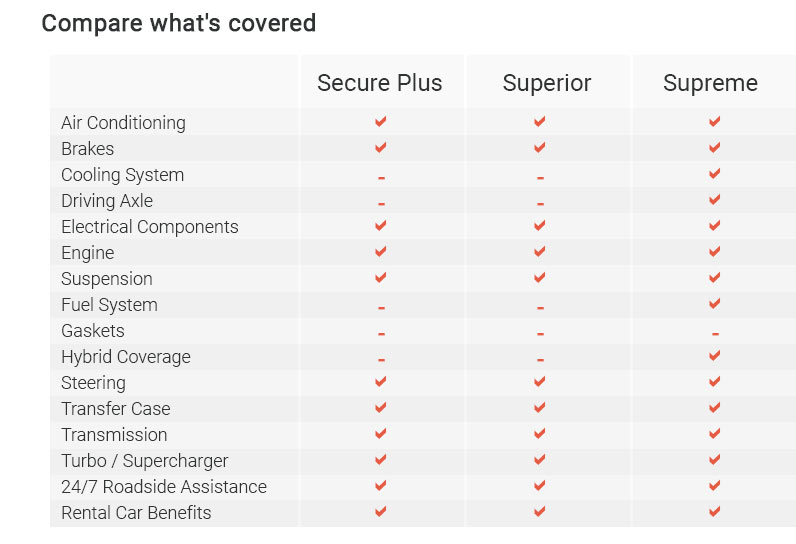
  • Coverage scope: Exclusionary ("bumper-to-bumper" style) vs. stated component. Confirm high-cost systems: engine, transmission, AWD/4WD, infotainment, ADAS sensors, cooling, steering.
  • Term and mileage: Length from in-service date or purchase date; watch for mileage caps and waiting periods.
  • Deductible structure: Per visit vs. per repair; disappearing deductible at selling dealer; roadside and rental eligibility.
  • Labor rate caps and diagnostics: Are shop labor rates capped? Is diagnostic time covered? Fluids and taxes included?
  • Exclusions and fine print: Wear items, gaskets, seals, "consequential damage," betterment clauses, pre-existing conditions.
  • Network and repair freedom: Dealer-only vs. nationwide shops; OEM parts vs. reman; how authorization is obtained.
  • Claims experience: Pre-authorization timelines, teardown rules, inspector delays, payment method (credit card on file vs. reimbursement).
  • Transfer/cancel: Transfer fees, pro-rata refunds, cancellation windows.
  • Use-case surcharges: Lifted vehicles, aftermarket tunes, rideshare/commercial use, snowplow, salvage/branded title.

Cost math that respects your time

Compare total expected value, not just sticker price. Price the plan, then model realistic repairs for your vehicle over your ownership horizon. If a plan costs $2,200 with a $100 deductible and likely repairs over 4 years average $1,300 - $3,000, the deductible frequency, labor caps, and what's actually covered will swing the outcome more than the headline price.

Quick calculation steps

  1. Estimate remaining ownership miles and list top 3 - 5 failure risks for your model/year.
  2. Pull typical repair costs (parts + labor rate × hours). Note ADAS calibration and programming.
  3. Apply plan rules: deductible type, labor caps, diagnostics, fluids, taxes.
  4. Compare: self-insure reserve vs. plan cost + your out-of-pocket under covered failures.
  5. Stress-test: one major failure plus one minor nuisance visit.

Control factors and subtle red flags

  • Administrator strength: Who backs the contract? Look for stable underwriters and clear claim-payment methods.
  • Authorization hurdles: Does the shop wait days for an inspector? Are photos/teardown required before approval?
  • Maintenance proof: Oil intervals, fluid specs, and record requirements; OEM schedule adherence prevents denial.
  • "Like kind and quality" parts: OEM vs. aftermarket/reman; confirm for electronics and turbo/charging components.
  • Software and calibrations: Many contracts exclude programming or calibrations - ask explicitly.
  • Consequence chains: If a covered part damages an excluded part (or vice versa), which way does coverage flow?

A real-world moment

At 67,300 miles the water pump seeped on a weekday commute; the service advisor asked, "Do you have coverage?" With a solid plan, I'd pay a $100 deductible and get a rental approved in minutes. Without it, the estimate was near a grand plus tax and a day off work - having a clear contract turns that surprise into a short, efficient phone call.

Who benefits - and who might skip

  • Good fit: High annual miles, complex tech (turbo, air suspension, advanced infotainment/ADAS), budgeters who value predictable costs.
  • Maybe skip: Low miles, strong DIY skills, large cash reserve, or models with excellent reliability and cheap parts.
  • EV/hybrid note: Some plans exclude HV batteries yet cover onboard chargers, inverters, cooling loops - read line items.

Contract review checklist

  1. Obtain the full sample contract and coverage level name/code in writing.
  2. Read definitions: "wear and tear," "pre-existing," "betterment," "consequential damage."
  3. Confirm deductible structure, labor rate cap, diagnostics, fluids, taxes, shop supplies.
  4. Check road service, rental/alt-transport caps, trip interruption.
  5. Verify start date, waiting period, transfer, and cancellation/refund terms.
  6. Note claim steps and typical approval timelines; payment method to shop.

Compare providers efficiently

Request apples-to-apples quotes: same term, deductible, coverage tier, and labor-rate policy. Ask for sample contracts from a manufacturer-backed option, a major third-party administrator, and a dealer-offered plan. Record plan codes, underwriter, and claim phone numbers. Confirm your preferred shop is acceptable and whether OEM parts are specified for critical systems.

Data to gather before quoting

  • Year/make/model/engine and VIN
  • Current mileage and expected annual miles
  • Ownership horizon and driving environment (city, hot/cold, towing)
  • ZIP code and preferred repair facility
  • Modifications or special use (towing, rideshare, commercial)

Bottom line

Choose the contract that maximizes control and efficiency: clear coverage, minimal friction at claim time, and pricing that beats your self-insured forecast under realistic failures - then keep good maintenance records and revisit the plan as your mileage, budget, and risk tolerance evolve...

https://www.consumeraffairs.com/auto_warranty/
Compare our 8 extended auto warranty picks, including Endurance, American Dream Auto Protect, olive, Omega Auto Care, Toco and Concord Auto ...

https://money.com/best-extended-car-warranties/
Vehicle type. Older cars and vehicles with high mileage are likely to need more repairs than a new vehicle. An extended car warranty for a ...

https://www.cars.com/articles/which-vehicles-have-the-best-warranty-coverage-447236/
There is no standard, and new-car warranties can vary a lot. One difference is duration, specified as the number of years or miles from your ...


atwratnwm
4.9 stars -1872 reviews